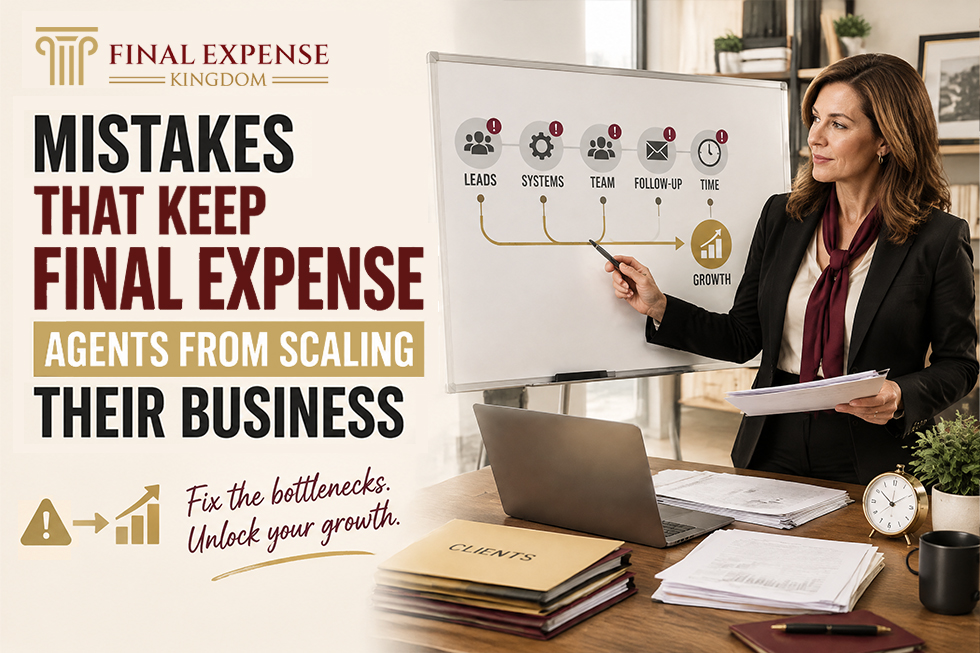
Growing a successful final expense insurance business requires more than strong sales skills. Many agents work hard every day, yet they struggle to increase revenue, expand their client base, or build a sustainable business. The problem is often not a lack of effort. It is a series of common mistakes that prevent long term growth.
Scaling is about creating a business that generates consistent results without depending entirely on constant personal effort. Agents who recognize and fix these challenges can improve productivity, increase client retention, and create predictable business growth.
Focusing Only on Closing Sales
Many final expense agents spend most of their time trying to close the next deal. While sales are essential, focusing only on immediate revenue often leads to missed opportunities.
A scalable business is built on relationships, referrals, and repeat opportunities. Agents who regularly follow up with clients, stay in touch after the policy is issued, and provide ongoing support create stronger trust. Satisfied clients are also more likely to recommend family members and friends, reducing the overall cost of acquiring new business.
Ignoring Lead Quality
Not every lead delivers the same value. Some agents continue purchasing low quality leads simply because they are less expensive. While this may seem like a cost saving strategy, poor quality leads often result in wasted time, lower conversion rates, and increased frustration.
Successful agents regularly evaluate where their best clients come from. Investing in high quality lead sources and tracking conversion performance allows businesses to focus resources where they generate the highest return.
Lack of a Consistent Sales Process
Without a structured process, every client interaction becomes different. This inconsistency makes it difficult to train new agents, measure performance, or identify areas for improvement.
A documented sales process creates repeatable success. From the first conversation through policy enrollment and follow up, each step should be clearly defined. Consistency improves customer experience while making it easier to scale operations as the business grows.
Trying to Do Everything Alone
Many independent agents believe they must handle every task themselves. They manage prospecting, scheduling, paperwork, customer service, and follow ups without any support.
As the business expands, this approach becomes unsustainable. Administrative work consumes valuable selling time, limiting growth potential.
Delegating routine responsibilities to virtual assistants, administrative staff, or automation tools allows agents to focus on activities that directly generate revenue. The ability to work on the business instead of constantly working in the business is one of the biggest differences between average and top performing agencies.
Not Using Technology Effectively
Technology has transformed the insurance industry, yet some agents still rely on manual tracking systems or outdated methods.
A modern customer relationship management system helps organize client information, schedule follow ups, monitor lead status, and automate routine communication. These tools improve efficiency while reducing the risk of missed opportunities.
Using technology also provides valuable insights into business performance, making it easier to identify trends and improve decision making.
Weak Follow Up Strategy
Many sales are lost simply because agents stop following up too soon. Prospective clients may need additional time before making a decision, especially when discussing financial planning or final expense coverage.
A structured follow up strategy keeps agents visible without becoming overly aggressive. Regular phone calls, emails, text messages, or educational content can help maintain engagement until the prospect is ready to move forward.
Consistency in follow up often separates high performing agents from those with inconsistent sales results.
Neglecting Personal Branding
Clients want to work with professionals they trust. Agents who fail to establish a recognizable personal brand often struggle to differentiate themselves from competitors.
A strong professional presence includes a consistent online profile, valuable educational content, positive customer reviews, and clear communication. Building credibility helps prospects feel more confident before the first conversation even begins.
Personal branding is not about self promotion. It is about demonstrating expertise and reliability over time.
Failing to Track Business Metrics
Many agents make business decisions based on assumptions instead of actual data. Without measuring performance, it becomes difficult to identify what is working and what needs improvement.
Some of the most valuable metrics include lead conversion rate, appointment completion rate, policy placement rate, client retention, referral generation, and average revenue per client.
Regularly reviewing these numbers allows agents to adjust strategies before small problems become significant obstacles.
Avoiding Continuous Learning
The insurance industry continues to evolve. Consumer expectations change, technology advances, and new sales techniques emerge every year.
Agents who stop learning often fall behind competitors who invest in professional development. Attending training sessions, improving communication skills, studying marketing strategies, and learning about new products all contribute to long term success.
The most successful agencies view learning as an ongoing investment rather than an occasional activity.
Building a Business That Can Scale
Scaling a final expense business is rarely about working longer hours. Instead, it comes from improving systems, making smarter decisions, and creating consistent client experiences.
Agents who focus on quality leads, efficient processes, meaningful client relationships, technology adoption, and continuous improvement position themselves for sustainable growth. Small operational changes made today can create significant business results over time.
A scalable business allows agents to serve more families while creating greater stability, profitability, and long term success.
Frequently Asked Questions
What is the biggest mistake final expense agents make when trying to scale?
One of the most common mistakes is focusing only on closing new sales while neglecting follow ups, referrals, and long term client relationships. Sustainable growth depends on building lasting trust, not just completing transactions.
How can technology help final expense agents grow their business?
Technology streamlines lead management, automates follow ups, organizes client information, and provides valuable performance insights. These improvements save time and increase overall efficiency.
Why is lead quality more important than lead quantity?
High quality leads are more likely to convert into paying clients, reducing wasted effort and improving return on investment. Fewer qualified prospects often produce better results than a large volume of poor quality leads.
How can final expense agents create a scalable business?
Agents can scale by developing standardized sales processes, using automation, tracking key performance metrics, delegating administrative tasks, investing in professional development, and maintaining strong relationships with existing clients.