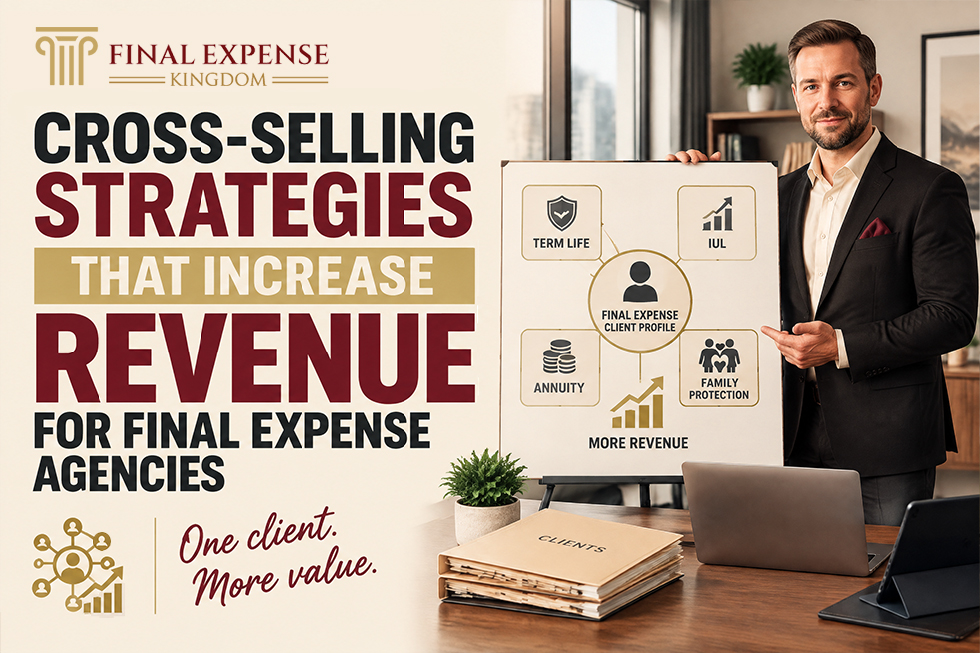
Growing a successful final expense agency is no longer just about generating more leads. While attracting new prospects remains important, increasing the value of every customer relationship can have an even greater impact on long term profitability. One of the most effective ways to achieve this is through cross selling.
For final expense agencies, cross selling is the practice of offering additional insurance products or related financial solutions that complement a client’s existing final expense policy. When done thoughtfully, it helps agencies strengthen customer relationships, improve client retention, and create new revenue opportunities without significantly increasing acquisition costs.
The key is to recommend products that genuinely address a client’s needs rather than simply expanding the sales portfolio. A customer focused approach builds trust and positions your agency as a long term advisor instead of a one time insurance provider.
Why Cross Selling Matters for Final Expense Agencies
Acquiring a new client often requires considerable investment in marketing, lead generation, and sales efforts. Maximizing the lifetime value of each customer is therefore essential for sustainable growth.
Cross selling allows agencies to increase revenue from existing clients while delivering additional financial protection. Since these customers already know and trust your agency, conversations about relevant products tend to be more productive than approaching entirely new prospects.
Beyond higher revenue, cross selling can also improve customer loyalty. Clients who rely on your agency for multiple insurance solutions are less likely to switch providers because they appreciate the convenience and confidence of working with a trusted advisor.
Understand Client Needs Before Recommending Products
Successful cross selling begins with understanding the client’s financial situation, family responsibilities, and future goals. Every recommendation should be based on genuine needs rather than sales targets.
During policy reviews or annual check ins, ask questions about recent life changes such as retirement, health concerns, family additions, or changes in financial responsibilities. These conversations often reveal opportunities to recommend additional coverage that provides meaningful value.
Clients are much more likely to accept recommendations when they see how each product addresses a specific concern rather than feeling pressured into buying more insurance.
Choose Complementary Products
The most effective cross selling strategy is offering products that naturally align with a final expense policy.
Depending on your agency’s portfolio, complementary products may include Medicare related plans, hospital indemnity coverage, critical illness insurance, dental and vision plans, or life insurance options designed for evolving family needs.
The objective is not to overwhelm clients with multiple offers at once. Instead, introduce products that solve relevant problems based on their current stage of life and financial priorities.
A targeted recommendation creates a better customer experience while improving conversion rates.
Build Cross Selling into the Customer Journey
Cross selling should not be limited to the initial sale. Many clients are more receptive after they have experienced your agency’s service and developed confidence in your expertise.
Consider introducing additional product discussions during scheduled policy reviews, renewal conversations, customer service interactions, or annual coverage assessments.
These touchpoints provide natural opportunities to evaluate changing needs and recommend appropriate solutions without creating a high pressure sales environment.
Consistent communication also demonstrates that your agency remains committed to protecting clients well beyond the first policy purchase.
Train Agents to Educate Rather Than Sell
The most successful agencies treat cross selling as an educational conversation rather than a sales pitch.
Agents should understand every product in the agency’s portfolio and clearly explain how each solution supports the client’s financial security. Training should focus on listening skills, consultative selling techniques, and identifying opportunities based on customer circumstances.
When agents prioritize education, clients feel informed rather than pressured. This approach builds stronger relationships and increases the likelihood of future referrals.
Use Customer Data to Personalize Recommendations
Modern customer relationship management systems provide valuable insights that can improve cross selling performance.
Agencies can analyze policy history, customer demographics, renewal dates, and previous interactions to identify suitable opportunities for additional coverage. Personalized recommendations are significantly more effective than generic offers because they demonstrate a deeper understanding of each client’s needs.
Data driven strategies also help agencies prioritize high potential opportunities while reducing unnecessary outreach.
Measure Results and Refine Your Strategy
Like any revenue initiative, cross selling should be monitored regularly.
Track important performance indicators such as cross sell conversion rates, average revenue per client, customer retention, and policy growth. Reviewing these metrics helps agencies identify successful techniques while improving areas that underperform.
Regular coaching sessions, customer feedback, and sales analysis can further strengthen the effectiveness of your cross selling strategy over time.
Continuous improvement ensures that your agency adapts to changing customer expectations and market conditions.
Conclusion
Cross selling is one of the most effective growth strategies available to final expense agencies. By focusing on customer needs, offering relevant products, and building trust through meaningful conversations, agencies can increase revenue while delivering greater value to their clients.
The most successful agencies understand that cross selling is not about selling more products. It is about providing comprehensive financial protection that evolves with each client’s changing circumstances. With the right processes, agent training, and customer focused approach with the guidance of Final Expense Kingdom, cross selling becomes a sustainable source of long term business growth and stronger client relationships.
Frequently Asked Questions
What is cross selling in a final expense agency?
Cross selling involves recommending additional insurance products that complement a client’s existing final expense policy. The goal is to provide broader financial protection while increasing the overall value of the customer relationship.
Which products are commonly cross sold with final expense insurance?
Common options include Medicare related plans, hospital indemnity insurance, critical illness coverage, dental and vision plans, and other life insurance products that match the client’s needs.
When is the best time to cross sell to existing clients?
The best opportunities often occur during annual policy reviews, customer service interactions, renewal discussions, or after significant life events that may require updated coverage.
How can agencies improve cross sell success rates?
Agencies can improve results by understanding client needs, personalizing recommendations, training agents in consultative selling, using customer data effectively, and maintaining regular communication with existing policyholders.