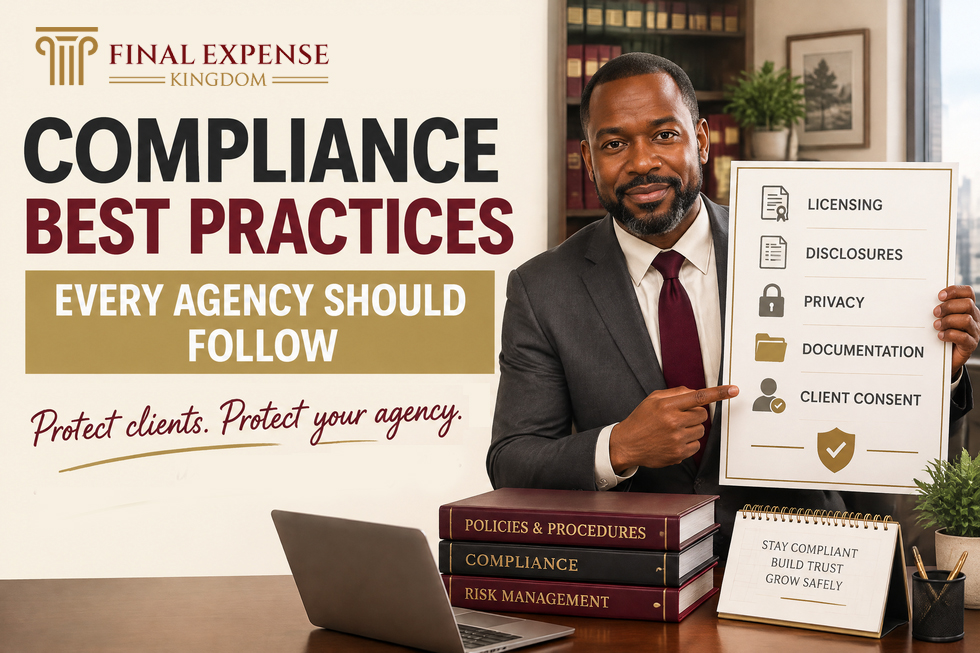
The final expense insurance market continues to grow as more families look for affordable coverage that helps ease financial burdens after the loss of a loved one. With this growth comes greater regulatory oversight and higher expectations for ethical business practices. For every final expense agency, compliance is no longer just a legal requirement. It is a business strategy that protects clients, strengthens carrier relationships, and builds a trustworthy brand.
Agencies that prioritize compliance reduce operational risks, improve customer confidence, and create a sustainable foundation for long term success. On the other hand, even a single compliance violation can lead to financial penalties, damaged reputation, lost carrier partnerships, and legal complications.
Establishing clear compliance standards across every stage of the sales process helps agencies deliver better customer experiences while staying aligned with industry regulations.
Build a Strong Compliance Culture
Compliance should not be limited to one department or one annual training session. It should become part of the agency’s daily operations and decision making process.
Leadership plays a critical role in setting expectations. Managers should communicate that ethical conduct, transparency, and regulatory adherence are just as important as meeting sales goals. When compliance becomes part of the company culture, agents are more likely to make responsible decisions even in challenging situations.
Regular discussions about compliance updates, real world scenarios, and internal policies help reinforce expectations across the organization.
Provide Consistent Agent Training
The insurance industry continues to evolve with changing regulations, updated carrier guidelines, and new consumer protection standards. Ongoing education ensures agents remain informed and prepared.
Training should cover important topics such as licensing requirements, product suitability, disclosure obligations, ethical sales practices, customer privacy, and documentation procedures. New agents should complete comprehensive onboarding, while experienced agents should participate in refresher sessions throughout the year.
Interactive training sessions and practical examples often produce better results than simply distributing policy documents.
Maintain Accurate Documentation
Proper documentation is one of the strongest defenses against compliance issues. Every client interaction should be documented thoroughly and consistently.
Agencies should maintain accurate records of client conversations, policy recommendations, signed disclosures, application details, and consent forms. Organized documentation not only supports regulatory requirements but also simplifies internal audits and carrier reviews.
Digital record management systems can help improve accuracy, reduce paperwork, and ensure documents remain easily accessible when needed.
Prioritize Transparent Client Communication
Clear communication builds trust while reducing misunderstandings that may lead to complaints or disputes.
Agents should explain policy features, limitations, waiting periods, premiums, and exclusions in simple language that clients can easily understand. Customers should never feel pressured into making immediate decisions without fully understanding the product.
Honest conversations create stronger client relationships and demonstrate the agency’s commitment to ethical business practices.
Protect Customer Data
Final expense agencies handle sensitive personal and financial information every day. Protecting client data should remain a top operational priority.
Strong cybersecurity measures, secure document storage, restricted employee access, and encrypted communication systems all contribute to protecting confidential information. Employees should also receive regular training on recognizing phishing attempts, password security, and safe data handling practices.
Data privacy compliance is essential for maintaining client confidence and avoiding costly security incidents.
Monitor Marketing and Advertising Practices
Marketing materials should accurately represent products and services without making misleading claims or unrealistic promises.
All advertisements, website content, email campaigns, and social media posts should comply with applicable insurance advertising regulations and carrier guidelines. Claims about policy benefits, pricing, or coverage should always be supported by accurate information.
Reviewing marketing materials before publication helps prevent compliance concerns and protects the agency’s reputation.
Stay Current With Regulatory Changes
Insurance regulations can change at both state and federal levels. Agencies that fail to monitor these updates may unintentionally violate new requirements.
Assigning responsibility to a compliance officer or leadership team member helps ensure regulatory changes are tracked, reviewed, and communicated throughout the organization. Agencies should also update internal policies, training materials, and operational procedures whenever new regulations are introduced.
Remaining proactive helps minimize risk and demonstrates professionalism to carriers and regulators.
Encourage Ethical Sales Practices
Compliance extends beyond meeting legal requirements. Ethical selling creates lasting client relationships and strengthens the agency’s reputation in the marketplace.
Agents should recommend products based on each client’s financial situation, coverage needs, and long term interests rather than focusing solely on commissions or sales targets. Respectful conversations, accurate recommendations, and transparent disclosures contribute to higher customer satisfaction and stronger retention rates.
An ethical approach often leads to more referrals and repeat business over time.
Conclusion
Compliance is not simply about avoiding penalties. It is about creating a trustworthy agency that clients, carriers, and regulators can rely on. By investing in continuous training, accurate documentation, transparent communication, data security, ethical sales practices, and regular compliance monitoring, final expense agencies position themselves for sustainable growth in a highly regulated industry.
Agencies that treat compliance as a core business function rather than an administrative task are better equipped to build stronger customer relationships, maintain valuable carrier partnerships, and achieve long term success with Final Expense Kingdom in an increasingly competitive market.
Frequently Asked Questions
What is compliance in a final expense agency?
Compliance refers to following all applicable insurance regulations, licensing requirements, carrier guidelines, and ethical business practices while serving clients and selling final expense insurance policies.
Why is compliance important for insurance agencies?
Strong compliance protects agencies from legal penalties, improves customer trust, strengthens carrier relationships, and supports long term business growth through ethical operations.
How often should final expense agencies provide compliance training?
Most agencies benefit from ongoing training throughout the year, along with comprehensive onboarding for new agents and additional sessions whenever regulatory or carrier requirements change.
What are the biggest compliance risks for final expense agencies?
Common risks include inaccurate documentation, misleading marketing, improper sales practices, data privacy breaches, licensing violations, and failure to keep up with changing insurance regulations.