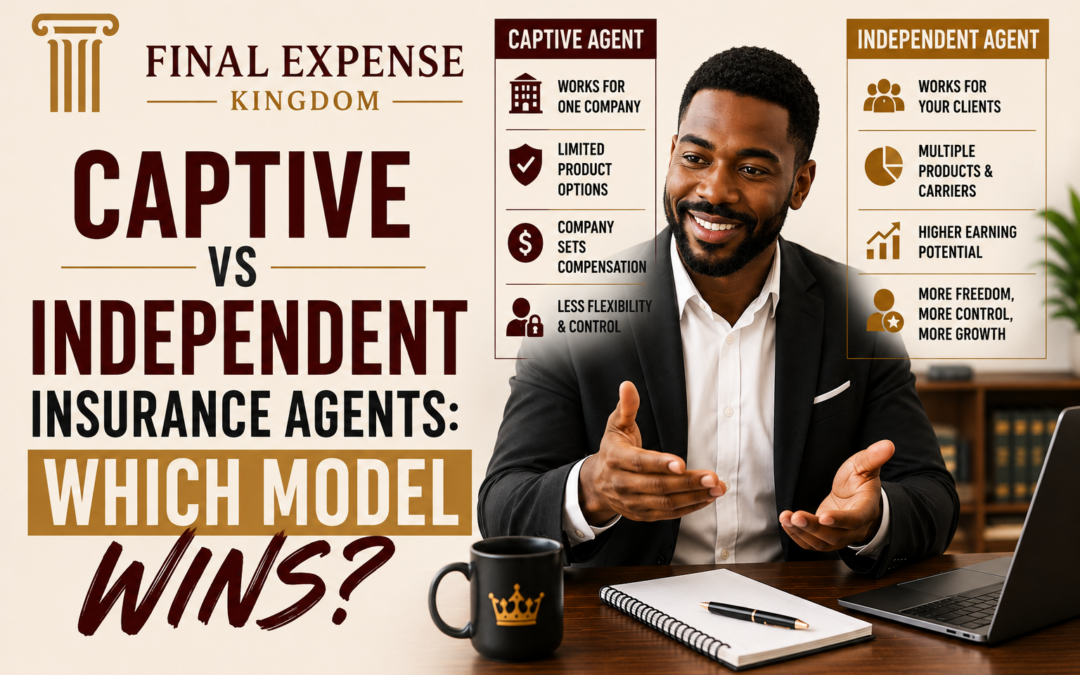
The insurance industry continues to evolve as customer expectations, digital transformation, and market competition reshape how policies are sold and serviced. One of the most important decisions for insurance carriers, agencies, and industry professionals is choosing between a captive and independent agency model.
Both approaches have distinct advantages, challenges, and long term implications for growth. While there is no universal answer that fits every business, understanding the strengths and limitations of each model can help organizations make informed strategic decisions.
So, when it comes to captive vs independent insurance agents, which model wins? The answer depends on business goals, customer needs, and market conditions.
Understanding Captive Insurance Agents
Captive insurance agents represent a single insurance company. They exclusively sell products from that carrier and typically operate under the company’s brand, guidelines, and pricing structure.
Many well known insurance companies rely heavily on captive agents to maintain brand consistency and customer trust. Since these agents focus on one carrier’s products, they often develop deep expertise in the company’s offerings.
Benefits of the Captive Model
The captive model offers several advantages for both agents and insurance carriers.
First, agents receive extensive training and support directly from the insurance company. This often includes marketing resources, technology platforms, lead generation programs, and ongoing professional development.
Second, brand recognition can make customer acquisition easier. Prospects are often familiar with established insurance brands, reducing the effort required to build credibility.
Third, agents can become highly knowledgeable about specific products, enabling them to provide detailed guidance and efficient customer service.
Challenges of the Captive Model
Despite its benefits, the captive approach comes with limitations.
Because agents can only offer policies from one carrier, customers have fewer options. If the company’s products or pricing are not competitive for a particular client, the agent may struggle to meet their needs.
Additionally, agents have limited flexibility when market conditions change. They cannot easily compare policies across multiple insurers or tailor recommendations beyond the products available through their carrier.
Understanding Independent Insurance Agents
Independent insurance agents work with multiple insurance companies. Rather than being tied to a single carrier, they can offer policies from a range of providers.
This flexibility allows independent agents to compare coverage options, pricing structures, and policy features to find solutions that align with a client’s specific requirements.
As insurance consumers become more price conscious and informed, the independent model has gained significant popularity.
Benefits of the Independent Model
The biggest advantage of independent agents is choice.
By partnering with multiple carriers, agents can present several options to customers. This improves the likelihood of finding the right coverage at a competitive price.
Independent agencies also have greater adaptability. If one insurer changes pricing, underwriting standards, or product availability, agents can pivot to other carrier relationships without disrupting their business.
From a customer perspective, independent agents often act as trusted advisors because they can provide unbiased recommendations across multiple insurance providers.
For agencies focused on growth, diversification reduces dependence on a single company’s performance and creates additional revenue opportunities.
Challenges of the Independent Model
Managing relationships with multiple insurance carriers can be complex.
Independent agents must stay informed about various products, underwriting requirements, and compliance standards. This requires ongoing education and administrative effort.
Marketing can also be more challenging because independent agencies must build their own brand identity rather than relying on the reputation of a single insurance company.
Additionally, technology integration across multiple carriers may create operational complexities, especially for smaller agencies.
Comparing Captive and Independent Models
When evaluating captive versus independent insurance agents, several factors influence the decision.
Customer Choice
Independent agents have a clear advantage in this area. Access to multiple carriers allows them to offer broader coverage options and competitive pricing.
Captive agents, while knowledgeable, are restricted to one insurer’s products.
Brand Support
Captive agents typically receive stronger corporate support, including marketing resources, training, and operational assistance.
Independent agents often need to invest more heavily in building their own systems and brand presence.
Business Flexibility
Independent agencies generally enjoy greater flexibility. They can respond to market shifts, carrier changes, and customer demands more effectively.
Captive agents operate within the framework established by their insurance company.
Revenue Opportunities
Independent agencies may have access to a wider range of commissions and growth opportunities because they work with multiple insurers and product categories.
Captive agents often benefit from structured incentive programs but may face limitations in product diversity.
Which Model Is Better for Today’s Market?
The modern insurance marketplace increasingly values personalization, transparency, and choice. Consumers want policies tailored to their unique circumstances rather than one size fits all solutions.
As a result, many industry experts view the independent model as better positioned for long term growth. The ability to compare multiple carriers and deliver customized recommendations aligns well with evolving customer expectations.
However, the captive model remains highly effective in markets where strong brand loyalty, specialized expertise, and consistent service are key differentiators.
For insurance companies seeking tight control over customer experience and brand representation, captive agents continue to provide significant value.
The Final Verdict
The debate between captive and independent insurance agents does not produce a single winner for every situation.
Captive agents excel in brand alignment, structured support, and product specialization. Independent agents stand out through flexibility, customer choice, and adaptability in a competitive marketplace.
For businesses focused on delivering personalized solutions and maintaining agility, the independent model often provides a stronger competitive advantage. For organizations prioritizing consistency, control, and brand driven growth, the captive model remains a powerful strategy.
Ultimately, the winning model is the one that best aligns with an organization’s objectives, target audience, and long term vision.
Frequently Asked Questions
What is the main difference between captive and independent insurance agents?
Captive insurance agents represent one insurance company, while independent insurance agents work with multiple carriers and can offer a wider range of policy options.
Are independent insurance agents better for customers?
Independent agents often provide more choices and can compare policies from different insurers, helping customers find coverage that matches their needs and budget.
Why do insurance companies use captive agents?
Insurance companies use captive agents to maintain brand consistency, improve product expertise, and ensure a standardized customer experience.
Which model is more profitable for an insurance agency?
Profitability depends on business strategy, market conditions, and customer demand. Independent agencies often have greater revenue diversification, while captive agencies may benefit from strong corporate support and established brand recognition.